
Kate’s Search for a Writing Life
Firefly LaneThis thread follows Kate’s movement from shelving her creative ambitions in favor of motherhood to reclaiming writing as a meaningful part of her identity and leaving a written legacy for her children.
increasing Bearing strength in each event
 decreasing
Bearing strength in each eventdecreasingA Writer Beside the Dream

A Writer Beside the Dream
A shared plan
After becoming close friends, Kate and Tully imagine themselves as a reporting team, pursuing stories and eventually working together on television. The shared dream gives Kate a clear future at a time when she is still unsure of her own abilities.
An existing strength
At school, Kate is recognized as a good writer, and Tully repeatedly encourages her to see that talent as part of their joint ambition. Their promise turns Kate’s skill into a shared project rather than a separate path she must choose for herself.
The first imbalance
Tully’s certainty and drive increasingly define the plan. Kate’s affection and loyalty make it difficult to distinguish her own wishes from the future her friend has already imagined for them.
The Unspoken Change

The Unspoken Change
A growing doubt
Kate becomes less certain that broadcast journalism suits her. She is capable in class, but finds herself drawn to other possibilities, including law, fiction, and a life centered on love and family.
The missed confession
When Tully secures a position at KCPO, she assumes Kate still wants to follow their joint plan. Kate tries to explain that she does not want the same career, but keeps losing her chance as Tully’s excitement takes over the conversation.
A choice made by silence
Kate joins the station office in a modest role, partly because the opportunity seems practical and partly because Tully has opened the door. Her reluctance is real, but she has not yet found a way to name what she wants instead.
Leaving the Newsroom

Leaving the Newsroom
Work without conviction
Kate learns the rhythms of the news office and proves useful as an editor and producer, but she remains more attentive to people than to the competition for stories. Her increasing competence does not make the profession feel like her own calling.
A private attachment
As Kate’s feelings for Johnny deepen, the workplace becomes emotionally difficult as well as professionally uncertain. When she finally tells him that she loves him, she also acknowledges that she has never been as committed to journalism as Tully.
Choosing another direction
Kate accepts a position in advertising and leaves the station. Her decision is not a rejection of her abilities so much as a recognition that success at a borrowed dream would not answer the question of what she wants her life to contain.
A Return to the Page
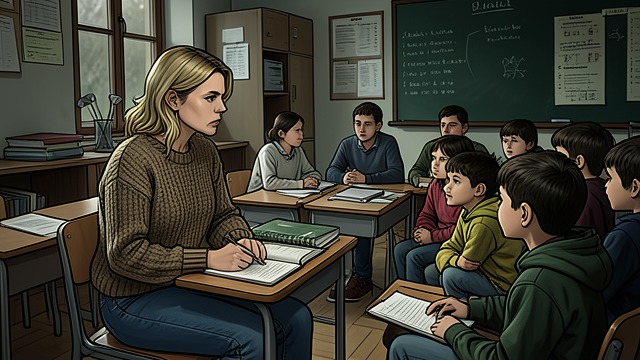
A Return to the Page
A life organized around care
Kate has devoted years to raising Marah and caring for her family, but as her children grow, she notices that the life she loves also leaves an unfilled space. Princess Diana’s death prompts her to confront how quickly opportunities can pass.
Starting again as a student
Kate enrolls in an introductory fiction-writing course at the University of Washington. She is older than the other students and anxious about returning, yet the class helps her feel that writing may be a genuine direction rather than a discarded youthful idea.
Criticism as momentum
Her first story receives pointed criticism, but Kate is able to treat the comments as instruction instead of proof that she should stop. She leaves class eager to revise, experiencing the first renewed sense of creative possibility in years.
The Unfinished Book
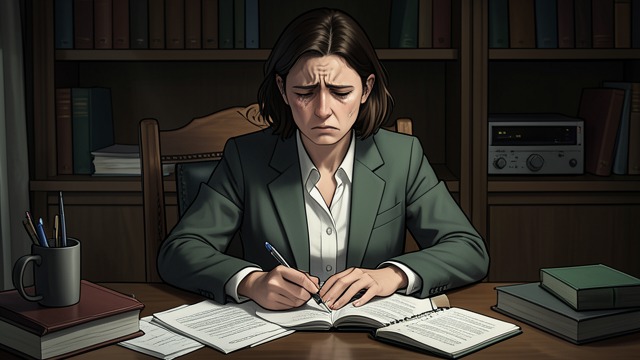
The Unfinished Book
The pressure of competing roles
With the twins and Marah needing her, Kate struggles to give writing sustained attention. She wants a creative life, but her days are filled with childcare, school commitments, housework, and the emotional labor of keeping the family running.
A final chance to record herself
After learning that her illness is terminal, Kate begins writing in a journal Tully gives her. She records not only dates and achievements but the relationships, ordinary routines, and family memories that define what her life meant to her.
A legacy in her own words
The journal becomes a record for her children of the person their mother was beyond her illness. Kate finishes by recognizing that the lasting measure of a life is love, family, and laughter, not whether she fulfilled an earlier professional ambition.
1977, before Kate and Tully begin senior year
1981, Kate’s final year at the University of Washington
The mid-1980s, after Kate’s relationship with Johnny begins
Autumn 1997, after Marah starts second grade
2003 to 2005, from Kate’s attempt to write again to her final illness
